How I Cut Product Release Documentation Time by 80%
TL;DR
- The Challenge: Help docs were trailing a month behind launches, leaving customers confused and Support blindsided.
- The Fix: Built a documentation pipeline using Jira, GitHub, Contentful, and Slack to bridge the gap between Product and Support.
- The Win: Reduced doc turnaround time by 80%. Help docs now launch with the product, reducing tickets and friction.
🔍 Behind the Scenes: Closing the Knowledge Gap
1. The One-Month Lag
As our release cycle accelerated, we realized we had a major team sync problem. Our Product teams were shipping features, but our public documentation was hitting the site an average of 30 days after the launch. We were sending out marketing emails about new features only for customers to find empty help pages.
2. Who Owns This?
The root cause was muddy responsibilities. Support didn't have a learning period to understand the new features, and Product didn't know who to send information to. No one owned the documentation, so it became the task that everyone expected someone else to do.
3. Designing a Self-Managing Team
I didn't just want to assign a task; I wanted to build a culture of ownership. I worked with Product, Engineering, and Support to create a dedicated "New Releases" writing group.
- Self-Assignment: We built a system where writers could self-manage based on their capacity.
- The Scoping Trigger: I moved the documentation request to the very beginning of the product lifecycle, the moment a pitch was scoped. This gave writers weeks to join the product Epic channels, test features in pre-release environments, and stay ahead of the curve.
4. The Build: The Automated Pipeline
I used our existing stack—Jira, GitHub, Slack, and Contentful—to build a workflow that reduced the mental load of requesting docs.
The Documentation Workflow
- Jira Template: A PM opens a New Release story the moment a project is scoped.
- GitHub Visibility: Writers track pull requests and capture technical notes directly from the code.
- Slack Alert: Automated pushes to #docs tag the writers for immediate visibility.
- Multi-Asset Drafting: Management of text, screenshots, and video demos (Field Guides).
- Sync-to-Live: Docs are published the second the feature goes live.
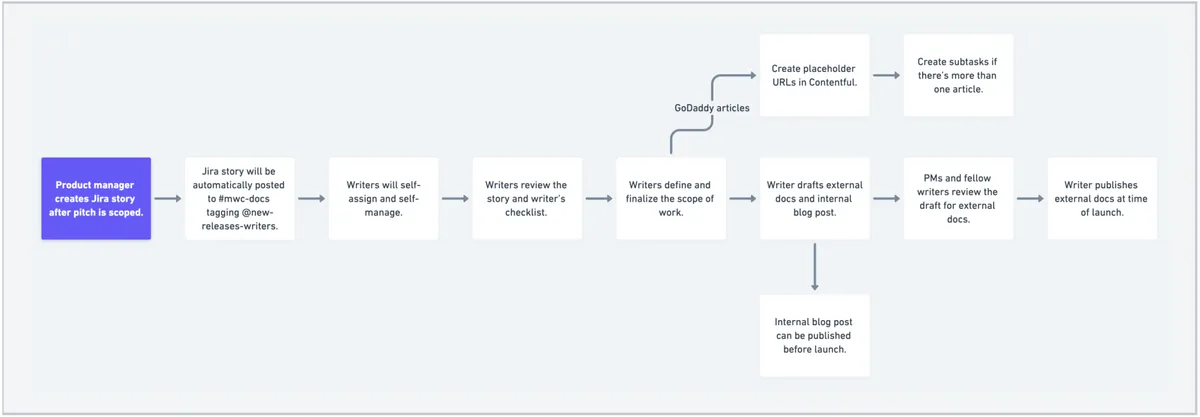
Visualizing the flow
5. The Result
The impact was immediate and team friction vanished.
- 80% Faster: We went from a 30-day lag to a same-day launch.
- Support Relief: Customers could help themselves on Day 1, leading to a visible drop in "How-to" tickets.
- Technical Accuracy: Staying close to the code in GitHub meant fewer rounds of review and higher precision.
6. My Role: Architect & SOP Author
I identified the lag as a major blocker for customer success. I created the plan, presented it to leadership, and built the Jira/Slack/GitHub logic. To ensure the process outlasted the initial setup, I authored the Standard Operating Procedure (SOP) that governed how we launched products.
View the full SOP: Documenting New Releases →
💡 Reflection
Product documentation isn't just about writing; it's about timing and technical proximity. By moving the Request trigger to the Scoping phase, we made sure that the people writing docs were never out of the loop.